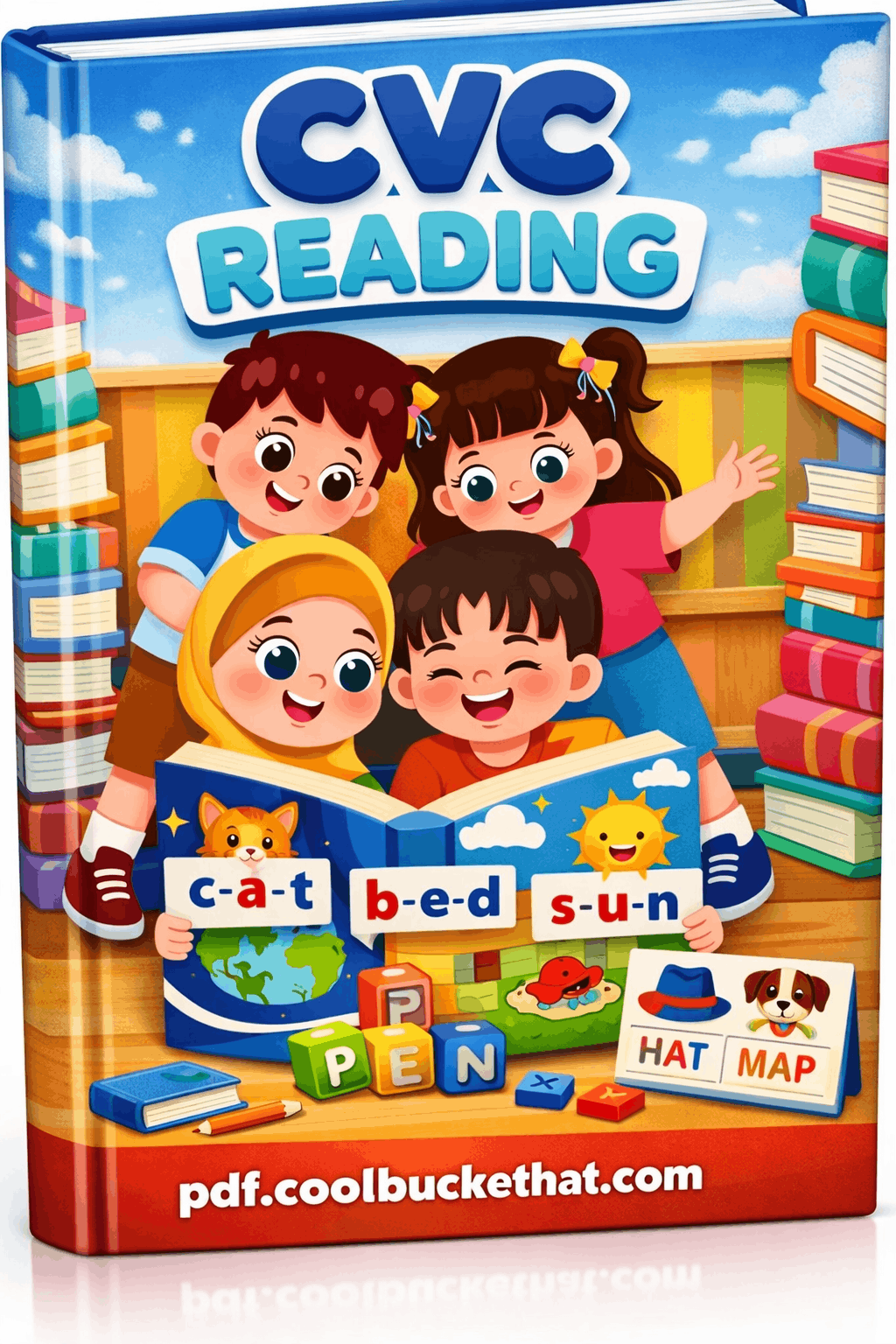
CVC READING
CVC READING for Early Literacy Skills and Confident Readers
CVC READING is one of the most important steps in a child’s early literacy journey. It helps young learners understand how letters and sounds work together to form simple words. When children master CVC reading, they gain confidence, improve decoding skills, and begin to enjoy reading independently. This foundation supports long-term success in reading, writing, and overall learning.
CVC reading focuses on consonant-vowel-consonant words such as cat, pen, and dog. These words follow clear phonics rules, making them easy for beginners to decode. This article explains why CVC reading is essential, how it supports early literacy, and how parents and teachers can use it effectively in everyday learning.
What Is CVC Reading and Why It Is Important
CVC reading teaches children to read words made up of three sounds: a consonant, a vowel, and another consonant. These simple patterns allow children to practice blending sounds without confusion.
Because CVC words are predictable, children experience early success. This success builds motivation and reduces frustration. As a result, children are more willing to practice reading regularly.
How CVC Reading Supports Phonics Development
Phonics is the relationship between letters and sounds. CVC reading strengthens this relationship through consistent practice. Children learn to sound out each letter and blend them smoothly to form words.
With repeated exposure, decoding becomes automatic. Once this happens, children can focus more on understanding the text rather than struggling with individual sounds. Therefore, CVC reading plays a key role in early phonics mastery.
Building Reading Confidence Step by Step
Confidence is essential for young readers. When children can read words independently, they feel proud of their progress. CVC reading supports this confidence by offering achievable challenges.
Short and simple words allow children to read without guessing. Each successful attempt reinforces the idea that reading is possible and enjoyable. Over time, children begin to see themselves as capable readers.
The Role of Repetition in CVC Reading
Repetition helps strengthen memory and recognition. CVC reading naturally includes repeated sound patterns, which supports learning without pressure.
When children see similar words again and again, recognition improves. Gradually, they no longer need to sound out every letter. This automatic recognition leads to smoother and faster reading.
Improving Comprehension With Simple Text
Although CVC words are simple, they can still form meaningful sentences and stories. These short texts help children practice comprehension from the beginning.
Children learn to follow simple storylines and understand actions. Asking basic questions after reading supports thinking and recall. This early comprehension practice prepares children for longer texts later.
Creating a Positive Reading Environment
A supportive environment makes reading more effective. Children should feel relaxed and encouraged. Pressure can slow progress, while positivity promotes growth.
Reading together helps build comfort. When adults model reading, children hear correct pronunciation and expression. This shared experience also strengthens emotional connections with books.
Using CVC Reading at Home
Parents can easily support CVC reading at home. Daily practice does not need to be long or formal. Even short sessions make a difference.
Reading aloud together is helpful. Parents can point to each word as it is read. This method helps children connect sounds with letters. Praising effort builds motivation and confidence.
Classroom Strategies for Teaching CVC Reading
Teachers often use CVC reading in early classrooms because it fits well into structured lessons. Small group reading allows focused instruction and support.
Visual aids such as word cards and pictures support understanding. Guided reading sessions help teachers monitor progress and correct errors gently. Consistent review reinforces learning.
Supporting Independent Reading Skills
Independence develops gradually. At first, children may rely on guidance. However, CVC reading encourages independence because the words are manageable.
Once children feel confident, they can read short texts on their own. This independence builds responsibility and pride. Over time, children begin choosing books and reading without reminders.
Enhancing Vocabulary Through CVC Reading
Vocabulary growth begins early. CVC reading introduces basic nouns, verbs, and descriptive words. Learning words in context helps children remember meanings.
Talking about stories supports deeper understanding. Simple discussions encourage children to use new words in conversation. This interaction strengthens language skills naturally.
Improving Focus and Attention
CVC reading supports attention development. Short texts match young attention spans and prevent overload.
Completing a story before losing focus is important. As concentration improves, reading sessions can be extended slowly. This gradual increase supports better focus in other learning areas as well.
Common Challenges and Simple Solutions
Some children struggle with blending sounds or remembering letters. These challenges are normal. Extra practice and patience usually solve the problem.
Breaking words into sounds helps. Repeating familiar words builds comfort. Encouragement is more effective than correction. With time, progress becomes visible.
Revisiting CVC READING activities regularly helps reinforce skills and rebuild confidence when difficulties appear.
Long-Term Benefits of CVC Reading Skills
Early reading success leads to long-term benefits. Children who master CVC reading often transition more easily to complex texts. Strong decoding skills support spelling, writing, and comprehension.
Reading confidence also improves academic performance. Confident readers participate more and explore new topics willingly. Therefore, early reading foundations have lasting impact.
Educational programs that focus on CVC READING aim to build this strong base. By starting simple, children are prepared for future challenges.
Making Reading a Daily Habit
Consistency matters more than duration. Short daily reading sessions are highly effective. Even ten minutes a day can lead to steady improvement.
Creating a routine helps children know what to expect. Reading before bedtime or after school works well. Over time, reading becomes part of daily life.
Choosing the Right CVC Reading Materials
Quality materials matter. Good CVC reading resources use clear text and supportive illustrations. Stories should be engaging but not overwhelming.
Children should feel interested in what they read. When interest is high, learning feels easier. Choosing the right material keeps motivation strong and progress steady.
Encouraging a Love for Reading
A love for reading starts with positive experiences. CVC reading provides those experiences by making reading achievable and fun.
When children feel successful, they want to read more. This motivation leads to lifelong learning habits. CVC READING helps create this positive beginning by focusing on confidence and enjoyment.
Final Thoughts
Early reading does not need to be complicated. With the right approach, children can learn quickly and happily. CVC reading offers a simple and effective way to begin the reading journey.
Through consistent practice, encouragement, and engaging materials, children develop essential literacy skills. CVC READING shows that when reading starts with clarity and confidence, long-term success naturally follows.
Comments (0)