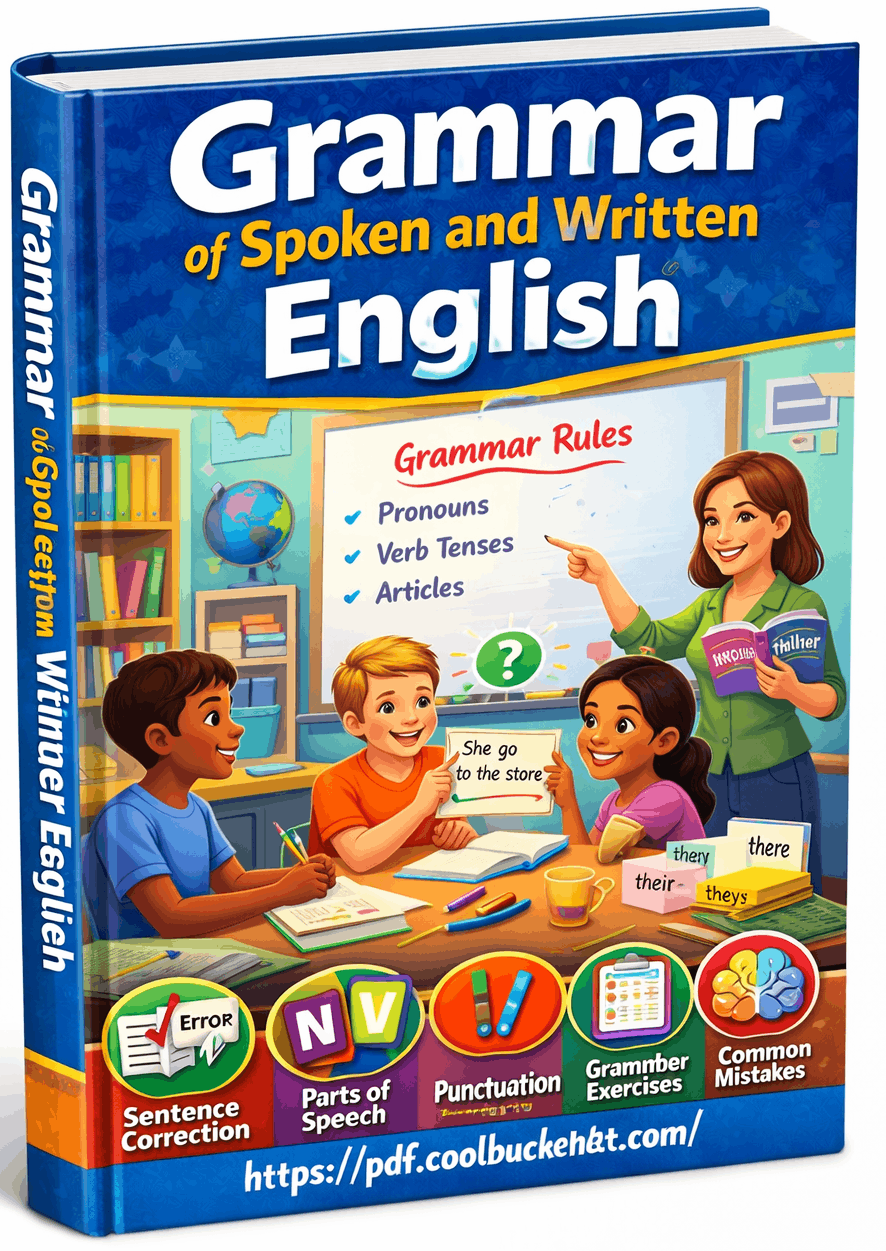
Grammar of Spoken and Written English
Grammar of Spoken and Written English Explained Simply Today
Grammar of Spoken and Written English is an important topic for anyone who wants to communicate clearly and confidently. Many English learners believe that grammar is the same everywhere. However, spoken English and written English follow different patterns. Both are correct, but they are used in different situations. Understanding this difference helps learners avoid confusion and speak or write more naturally.
This article explains how spoken and written grammar works, why they are different, and how learners can master both. The content is written in a simple, blog-friendly style, making it easy to read, understand, and apply in real life.
Why Grammar Changes Between Speaking and Writing
Language adapts to purpose. When people speak, they aim for speed and connection. When they write, they aim for clarity and accuracy. Because of this, grammar changes slightly depending on how English is used.
Spoken English is informal and flexible. Written English is structured and planned. These differences are natural and should not be seen as mistakes. Instead, they should be understood and practiced correctly.
Once this idea is accepted, learning becomes easier.
Understanding Grammar in Spoken English
Spoken grammar focuses on communication rather than perfection. Sentences are often shorter. Sometimes, they are incomplete. However, meaning is still clear.
For example, speakers often say:
- “Coming with me?”
- “Sounds good.”
- “Don’t know yet.”
These sentences may seem grammatically incomplete in writing. However, in conversation, they are natural and correct.
Spoken grammar is shaped by context, tone, and shared understanding.
Common Features of Spoken English Grammar
1. Short and Incomplete Sentences
In conversation, people do not speak in long sentences. Short phrases are preferred because they are faster and easier to process.
2. Use of Contractions
Contractions like I’m, we’re, and don’t are very common. They make speech sound natural and friendly.
3. Repetition and Pauses
Words and phrases are repeated for emphasis or clarity. Pauses are also used to think or show emotion.
4. Use of Fillers
Words like well, um, you know, and actually are often used. They help manage conversation flow.
These features are natural in speech and should not be avoided.
Grammar in Written English Explained
Written English follows stricter grammatical rules. Sentences are complete. Ideas are organized clearly. This is because writing is permanent and can be read many times.
Written grammar avoids ambiguity. Punctuation, sentence structure, and formal vocabulary are used carefully.
Because of this, written English often sounds more formal than spoken English.
Common Features of Written English Grammar
1. Complete Sentences
Every sentence usually has a subject and a verb. Clarity is prioritized.
2. Formal Structure
Paragraphs are organized logically. Transitions connect ideas smoothly.
3. Limited Use of Contractions
In formal writing, contractions are often avoided. For example, do not is preferred over don’t.
4. Precise Vocabulary
Words are chosen carefully to avoid confusion or misunderstanding.
These features help readers understand the message clearly.
Key Differences Between Spoken and Written Grammar
The Grammar of Spoken and Written English differs mainly in structure, tone, and flexibility. Spoken grammar allows freedom. Written grammar requires accuracy.
For example:
- Spoken: “Got it. Will do.”
- Written: “I understand the instructions and will complete the task.”
Both are correct. The context decides which one should be used.
Understanding this difference improves communication skills greatly.
Why Learners Often Get Confused
Many learners are taught only written grammar in school. As a result, they try to speak the same way they write. This makes their speech sound unnatural or too formal.
On the other hand, some learners use spoken grammar in writing. This can make writing unclear or incorrect in formal situations.
This confusion is common but can be corrected with awareness and practice.
Learning Spoken Grammar Naturally
Spoken grammar is best learned through listening and speaking. Conversations, podcasts, and videos help learners notice natural patterns.
Repeating phrases aloud improves fluency. Mistakes should be accepted as part of learning. Over time, correct patterns become automatic.
Practice builds confidence faster than memorization.
Improving Written Grammar Step by Step
Written grammar improves through reading and writing. Books, articles, and essays expose learners to correct structure.
Writing regularly helps reinforce rules. Feedback is also important. Errors should be corrected gently and clearly.
With time, accuracy improves naturally.
When to Use Spoken Grammar
Spoken grammar is used in:
- Daily conversations
- Phone calls
- Meetings and discussions
- Informal messages
In these situations, clarity and comfort are more important than strict rules.
Natural speech builds connection and confidence.
When to Use Written Grammar
Written grammar is used in:
- Emails
- Reports
- Articles and blogs
- Academic writing
Here, accuracy and structure matter more. Readers depend on grammar to understand meaning.
Correct writing creates a professional impression.
Passive Voice in Spoken and Written English
The passive voice is more common in writing than speaking. In spoken English, active voice is preferred because it is direct.
For example:
- Spoken: “They fixed the problem.”
- Written: “The problem was fixed.”
Both are correct. Choice depends on purpose and context.
Understanding this helps learners choose correctly.
Transition Words in Speaking and Writing
Transitions connect ideas smoothly. In spoken English, simple transitions like so, and, or but are common.
In written English, transitions are more formal, such as however, therefore, and in addition.
Using the right transition improves flow and clarity.
How to Practice Both Types of Grammar
Learners should practice both forms separately. Speaking practice should focus on fluency and comfort. Writing practice should focus on clarity and correctness.
Recording spoken practice helps self-evaluation. Writing short paragraphs daily improves structure.
Balanced practice leads to strong overall communication skills.
The Importance of Context
Context decides grammar choice. Formal situations require written grammar. Informal situations allow spoken grammar.
There is no single correct style. The right choice depends on audience, purpose, and medium.
Awareness of context prevents mistakes.
Long-Term Benefits of Understanding Both
Understanding the Grammar of Spoken and Written English gives learners flexibility. They can adapt their language to any situation.
Confidence improves in conversations. Writing becomes clearer and more professional. Communication becomes effective and natural.
This skill is valuable in education, careers, and daily life.
Final Thoughts
Grammar is not one-size-fits-all. Spoken and written English follow different rules for good reasons. Both forms are correct when used appropriately.
By understanding and practicing both, learners become confident communicators. The Grammar of Spoken and Written English should be seen as a tool, not a barrier. With patience and practice, mastering both styles becomes achievable and rewarding.
Comments (0)