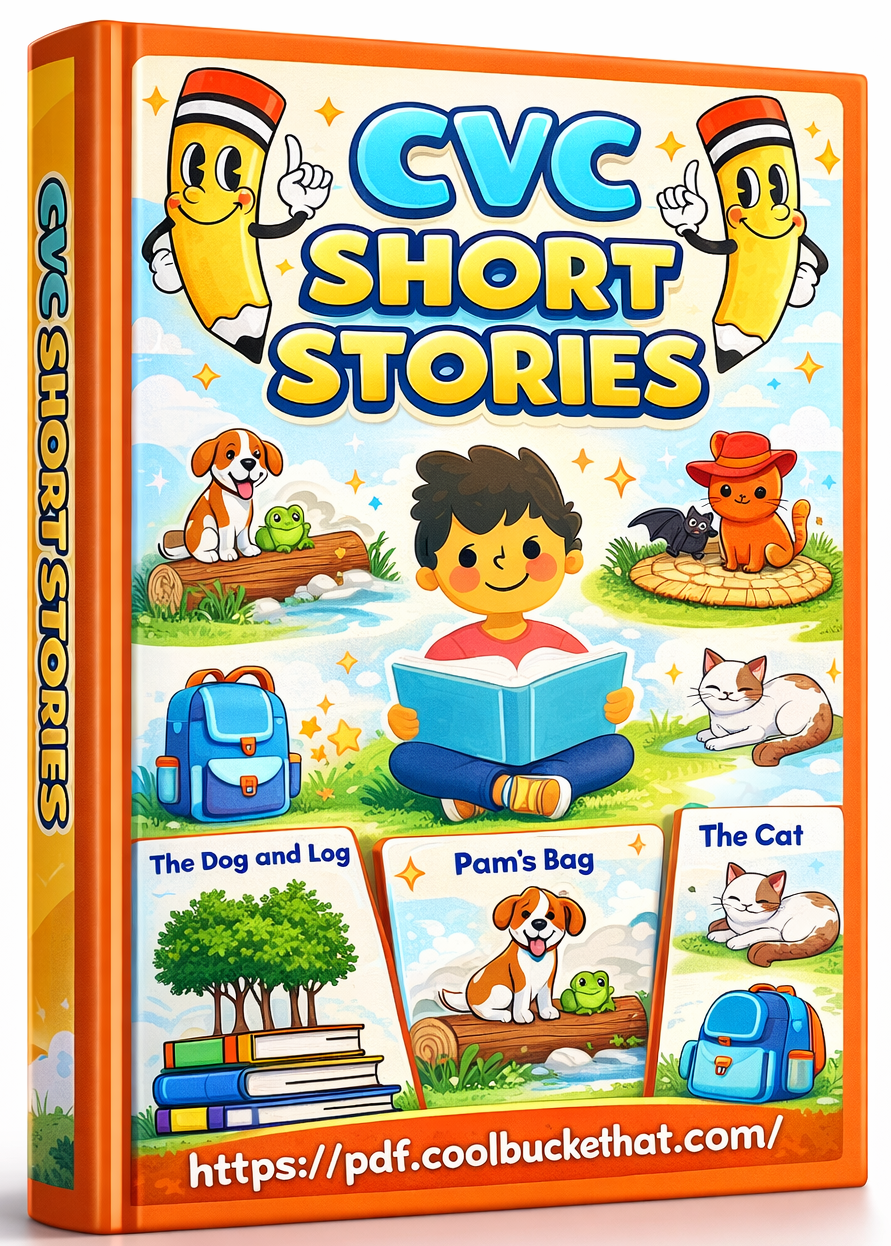
CVC Short Stories
CVC Short Stories for Early Reading Success
CVC Short Stories are one of the most effective tools for helping young learners begin their reading journey with confidence. CVC (Consonant–Vowel–Consonant) words such as cat, dog, and sun are the foundation of phonics-based reading. When these simple words are used in short, meaningful stories, children learn not only how to decode words but also how to understand and enjoy what they read. This article explains why CVC short stories are so valuable, how they support early literacy, and how they can be used effectively at home and in the classroom.
What Are CVC Short Stories
CVC short stories are simple reading passages made up mostly of CVC words and basic sight words. The sentences are short, clear, and predictable.
These stories are designed for:
- beginner readers
- preschool and kindergarten learners
- Grade 1 students
- struggling or remedial readers
The goal is to make reading easy, successful, and enjoyable.
Why CVC Words Matter in Early Reading
CVC words follow a simple and consistent pattern. Each letter makes one clear sound, which helps children decode words confidently.
CVC words help children:
- blend sounds easily
- avoid guessing
- build phonics confidence
- read independently
Using these words in stories helps children see how phonics works in real reading.
How Short Stories Support Reading Confidence
Long texts can overwhelm early readers. Short stories feel achievable and friendly.
When children finish a short story successfully, they feel proud. This sense of success builds confidence and motivation.
Confidence encourages children to read more often.
Building Reading Fluency Step by Step
Fluency means reading smoothly, accurately, and with expression. CVC short stories are perfect for fluency practice.
Because the text is simple, children can reread stories multiple times.
Each rereading improves:
- speed
- accuracy
- confidence
Fluency grows naturally with practice.
Supporting Reading Comprehension
CVC short stories are not just about sounding out words. They also help children understand meaning.
Simple plots and familiar topics allow children to focus on comprehension.
Teachers and parents can ask basic questions such as:
- Who is in the story?
- What happened?
- Where did it happen?
Understanding meaning is a key reading goal.
Ideal for Beginning and Struggling Readers
CVC short stories are especially helpful for:
- children just learning to read
- readers who struggle with decoding
- ESL/ELL learners
- students needing extra phonics support
The simple structure reduces frustration and builds confidence.
Improving Vocabulary in Context
CVC stories introduce basic vocabulary in meaningful sentences.
Children learn words by seeing them used, not by memorizing lists.
Repeated exposure helps words stick in memory.
Encouraging Independent Reading
Because the stories are simple, children can read them on their own.
Independent reading:
- builds responsibility
- increases self-confidence
- creates a sense of achievement
Children feel proud when they read without help.
Using Repetition to Build Mastery
Repetition is essential in early reading. CVC short stories naturally repeat words and patterns.
This repetition:
- strengthens decoding skills
- improves fluency
- supports spelling development
Mastery comes through repeated success.
Developing Phonemic Awareness
CVC stories strengthen phonemic awareness by reinforcing sound patterns.
Children become better at:
- hearing vowel sounds
- recognizing word families
- blending sounds smoothly
These skills are essential for future reading success.
Making Reading Fun and Engaging
CVC short stories often include simple, fun topics such as animals, family, or daily activities.
Enjoyable content keeps children interested and motivated.
When reading is fun, practice happens naturally.
Perfect for Classroom Use
Teachers can use CVC short stories in many ways:
- guided reading groups
- reading centers
- phonics lessons
- intervention programs
They are easy to integrate into daily literacy instruction.
Great for Home Practice
Parents can use CVC short stories for short daily reading sessions at home.
Even 5–10 minutes a day makes a difference.
Short practice sessions fit easily into busy routines.
Supporting English Language Learners
English language learners benefit from the clear structure of CVC stories.
Simple words and sentences support pronunciation and understanding.
Visuals can further support comprehension.
Improving Focus and Attention
Short stories match young learners’ attention spans.
Children can stay focused until the end of the story.
Improved focus supports better learning overall.
Preparing Children for Longer Texts
CVC short stories act as a bridge to longer books.
Once children are confident with simple stories, they are ready for more complex texts.
Strong foundations make future reading easier.
Encouraging Discussion and Speaking
After reading, children can talk about the story.
Discussing stories helps develop:
- speaking skills
- comprehension
- confidence in expressing ideas
Reading becomes interactive and meaningful.
Tracking Progress Easily
Progress is easy to see with CVC short stories. Adults may notice:
- smoother reading
- fewer mistakes
- increased confidence
Visible progress motivates children to keep reading.
Adapting Stories for Different Levels
CVC stories can be adapted easily:
- beginners can read one story
- advanced learners can read multiple stories
- questions can be added or simplified
This flexibility supports mixed-ability learners.
Creating a Daily Reading Routine
Consistency matters more than length. One short story a day is enough.
Daily reading builds strong habits and steady progress.
Routine supports long-term success.
Choosing Quality CVC Short Stories
Good CVC short stories should be:
- fully decodable
- simple and clear
- engaging and positive
- age-appropriate
Quality materials lead to better learning outcomes.
Long-Term Benefits of CVC Story Practice
Regular practice with CVC short stories supports:
- strong phonics skills
- fluent reading
- better comprehension
- confidence and independence
These skills benefit children throughout their education.
Final Thoughts
CVC Short Stories are a powerful and gentle way to introduce children to reading. By using simple words, short sentences, and meaningful stories, they help young learners build confidence, fluency, and understanding. Whether used at home or in the classroom, CVC short stories create positive reading experiences and strong literacy foundations. With consistent practice and encouragement, children develop the skills they need to become happy, confident readers.
Comments (0)