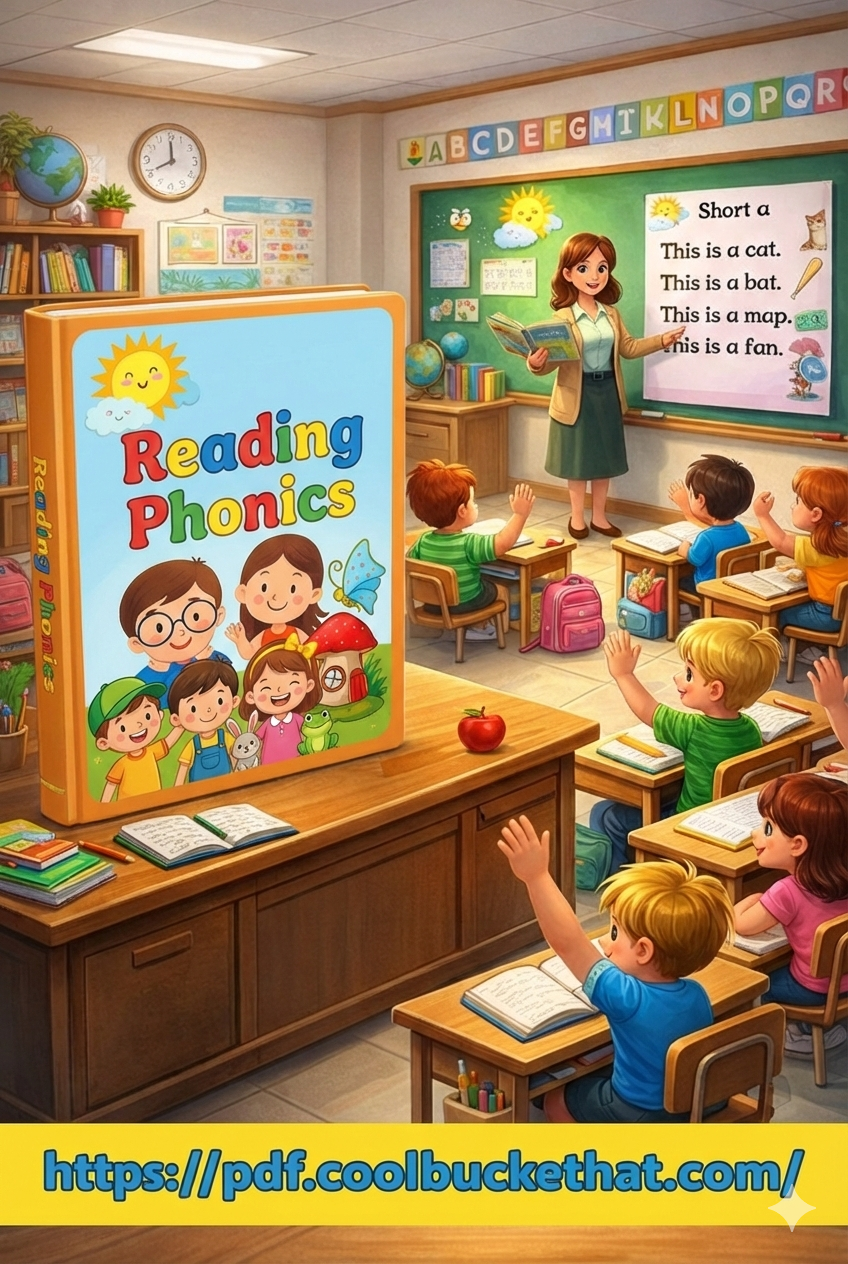
Reading Phonics
Reading Phonics: Building Strong Foundations for Early Readers
Reading Phonics is one of the most important methods used to teach children how to read. It focuses on the relationship between letters and sounds, helping learners decode words accurately and confidently. Phonics instruction lays the foundation for fluent reading, strong spelling, and overall literacy success. This article explains what reading phonics is, why it matters, and how it supports children in becoming confident, independent readers.
What Is Reading Phonics
Reading phonics is an approach that teaches how letters and groups of letters represent sounds. Children learn to blend these sounds together to read words.
For example, children learn that:
- c makes the /c/ sound
- a makes the /a/ sound
- t makes the /t/ sound
When blended, these sounds form the word cat. This process is called decoding and is the core of phonics-based reading.
Why Phonics Is Essential for Learning to Read
Phonics gives children a clear strategy for reading unfamiliar words. Instead of guessing, children learn how to sound out words step by step.
This approach:
- Builds reading confidence
- Reduces frustration
- Improves accuracy
- Supports long-term reading success
Children who understand phonics are better prepared to handle new and challenging texts.
How Reading Phonics Supports Early Literacy
Early literacy skills develop best when phonics is taught systematically. Children move from simple sounds to more complex patterns.
Phonics instruction helps children:
- Recognize letter sounds
- Blend sounds into words
- Segment words into sounds
- Read with greater fluency
These skills work together to create strong readers.
Phonemic Awareness and Phonics
Phonemic awareness is closely connected to phonics. It is the ability to hear and work with sounds in spoken words.
Before reading printed words, children learn to:
- Identify beginning and ending sounds
- Blend spoken sounds
- Break words into individual sounds
Strong phonemic awareness makes phonics learning easier and more effective.
CVC Words in Phonics Instruction
CVC (Consonant–Vowel–Consonant) words are usually the first words taught in phonics.
Examples include cat, dog, sun, and bed. These words are simple and follow predictable sound patterns.
CVC words help children practice blending sounds and reading independently.
Moving From Words to Sentences
Once children master single words, phonics instruction expands to phrases and sentences.
Reading simple sentences helps children:
- Improve fluency
- Understand meaning
- Build reading stamina
This progression supports a smooth transition to reading books and paragraphs.
Benefits of Reading Phonics for Struggling Readers
Phonics is especially helpful for struggling readers. It provides a clear and structured way to approach reading.
Instead of memorizing words, children learn rules and patterns. This empowers them to decode new words on their own.
Phonics-based instruction builds confidence and reduces anxiety.
Supporting English Language Learners With Phonics
English language learners benefit greatly from phonics instruction. Clear sound-letter connections support pronunciation and word recognition.
Phonics helps learners understand how English words are formed, which improves reading and speaking skills.
Visuals and repetition make learning more accessible.
Multisensory Phonics Learning
Children learn best when multiple senses are involved. Multisensory phonics instruction may include:
- Saying sounds aloud
- Tracing letters
- Using letter tiles
- Matching words with pictures
This approach strengthens memory and engagement.
Role of Repetition in Phonics
Repetition is key to mastering phonics. Children need repeated exposure to sounds and patterns.
Through regular practice, decoding becomes automatic. This automaticity leads to fluent reading.
Short daily practice sessions are more effective than long, irregular ones.
Phonics and Reading Fluency
Fluency is the ability to read smoothly, accurately, and with expression. Phonics supports fluency by improving decoding speed.
When children no longer struggle to sound out words, they can focus on meaning and expression.
Fluent readers enjoy reading more and understand texts better.
Phonics and Spelling Skills
Phonics instruction also supports spelling. Children learn how sounds map to letters, which helps them spell words accurately.
Understanding patterns such as word families improves both reading and writing.
Strong spelling skills reinforce reading confidence.
Using Phonics at Home
Parents play an important role in phonics learning. Simple activities at home can make a big difference.
Examples include:
- Reading phonics-based books
- Practicing letter sounds
- Playing sound games
- Encouraging children to sound out words
Positive support builds motivation and confidence.
Using Phonics in the Classroom
Teachers use phonics instruction in many ways:
- Whole-class lessons
- Small group instruction
- Reading centers
- Intervention programs
Structured phonics programs ensure that skills are taught in the correct order.
Phonics for Different Age Groups
Phonics is most commonly used in preschool through Grade 2, but it can benefit older struggling readers as well.
Learners of all ages can improve reading skills through phonics-based instruction.
Phonics is not limited to young children.
Common Challenges in Phonics Learning
Some children struggle with blending sounds or remembering letter-sound relationships.
These challenges can be addressed with patience, repetition, and multisensory activities.
Progress may be gradual, but consistent practice leads to success.
Creating a Phonics Learning Routine
A daily routine helps children make steady progress. Even 10 minutes a day can be effective.
Consistency builds confidence and skill mastery.
A routine makes learning predictable and stress-free.
Importance of Decodable Texts
Decodable texts are books that use phonics patterns children have already learned.
These texts allow children to apply phonics skills successfully.
Reading decodable texts builds independence and confidence.
Measuring Progress in Phonics
Progress can be measured through:
- Letter-sound assessments
- Word reading accuracy
- Reading fluency
- Comprehension checks
Regular monitoring ensures instruction meets learner needs.
Long-Term Benefits of Strong Phonics Skills
Strong phonics skills support:
- Fluent reading
- Better comprehension
- Strong spelling
- Writing confidence
These benefits extend throughout a child’s education.
Phonics and Lifelong Reading Success
Children who master phonics early are more likely to enjoy reading.
Reading becomes easier and more enjoyable when decoding is automatic.
This positive experience supports lifelong learning.
Choosing the Right Phonics Approach
A good phonics approach should be:
- Systematic
- Clear and structured
- Age-appropriate
- Engaging
Quality instruction makes a significant difference.
Final Thoughts
Reading Phonics is a powerful and proven method for teaching children how to read. By focusing on sound-letter relationships, phonics gives learners the tools they need to decode words confidently and independently. With consistent practice, supportive instruction, and positive encouragement, phonics builds strong reading foundations that support lifelong literacy success. When children understand how reading works, they gain confidence, motivation, and a love for learning.
Comments (0)